

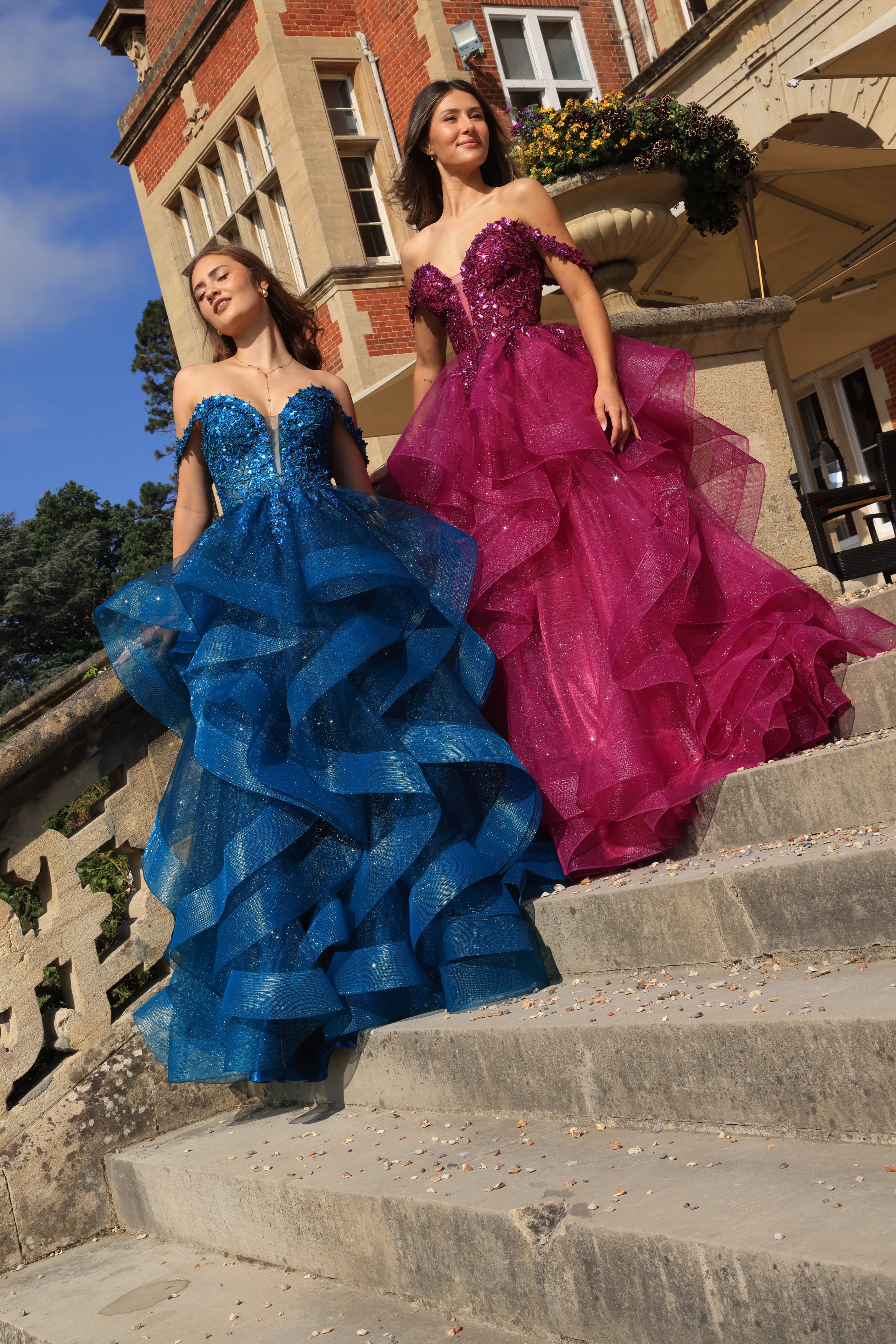
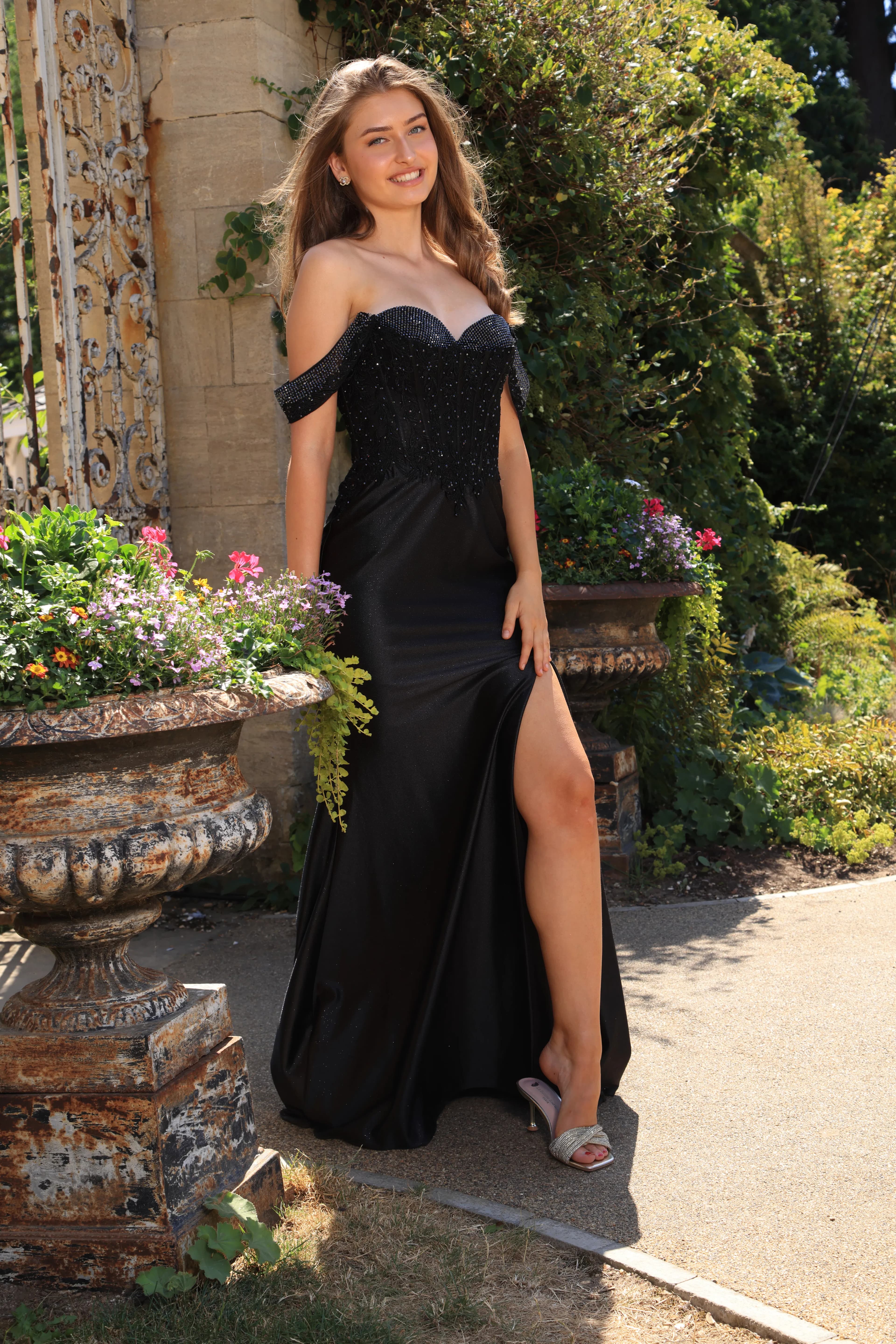
Appointments
How to prepare for your prom dress appointment
A practical guide to choosing favourites, planning what to wear and arriving ready to explore different prom dresses with confidence.
Your appointment is time set aside to discover what feels right. A little preparation can make it easier to compare dresses, communicate what you like and enjoy trying something unexpected.
In this guide
Start with five favourites
Browse before your visit and save up to five dresses that genuinely catch your attention. Your favourites do not reserve those dresses or need to be a final decision. They give the appointment a useful starting point and help you notice patterns in the colours, shapes or details you are drawn to.
Try to keep some variety in the selection. Saving only one silhouette or colour can make it harder to compare. A fitted dress, an A-Line shape and a fuller skirt may feel completely different once you move in them, even when you liked each one in a photograph.
Availability can change, so treat saved dresses as preferences rather than guarantees. The boutique can help you explore the closest available options if a particular colour or size is not ready to try on the day.
- View favourites
Review the dresses you have saved for your appointment.
- Browse prom dresses
Explore the current public dress collection.
Prepare for the appointment
These simple choices keep the focus on the dresses rather than last-minute decisions.
01
Wear comfortable, simple layers
Choose clothes that are easy to change out of and back into. A close-fitting top or simple base layer can make changing feel more comfortable, while avoiding bulky layers helps you see how a dress sits.
02
Bring the shoes you expect to wear
If you already have shoes with a similar heel height, bring them. They can help you understand the overall proportion and how the skirt falls. If your shoes are not decided, that does not need to delay the appointment.
03
Know your usual size, but stay flexible
Note the sizes you normally wear for your own reference. Dress sizing can vary between designers and styles, so the label is only a starting point for finding a comfortable fit.
04
Choose helpful opinions
Think about who helps you make calm decisions. A trusted person can be useful, but the most important response is your own: how the dress feels, how freely you can move and whether you recognise yourself in it.
What to bring
- Your saved dress selection or a few screenshots
- A note of preferred colours and sizes
- Shoes with a similar heel height, if you have them
- Any essential event details you already know
- An open mind about shapes you have not tried before
What to notice while trying dresses
How it feels
Stand, sit and walk in each dress. Notice whether you can breathe comfortably, whether the neckline feels secure and whether the skirt moves in a way you enjoy.
Comfort does not mean choosing the least distinctive option. It means finding a dress you can wear with confidence for the full event rather than only admiring it while standing still.
What changes your opinion
Pay attention to the details that make a dress move from a maybe to a favourite. It might be the colour near your face, the balance of the skirt, the fabric or the way the back is shaped.
A useful comparison is more specific than simply liking or disliking a dress. Those details help the next selection become more accurate.
Keep an open mind without losing your style
Try one unexpected option
A different silhouette or colour gives you a genuine comparison, even if it confirms that your first instinct was right.
Separate the dress from the photograph
Product images help you shortlist, but the way fabric, colour and proportion work on you can only be understood in person.
Avoid deciding under pressure
Take a moment to look from different angles and move naturally. A considered response is more useful than an immediate verdict.
After trying dresses
Before you leave, note the dresses that felt strongest and what you liked about each one. If you need time to think, those specific observations are more helpful than trying to remember every detail later.
Ask what the next practical steps are for the dress you prefer. Alteration needs and timing depend on the dress and the individual fit, so they should be discussed as part of your own plan rather than assumed in advance.
If you continue browsing, compare new options against the qualities you already identified. That keeps the search focused without turning your original shortlist into a rigid rule.
Appointment questions
Do I need to know exactly which dress I want?
No. A shortlist is helpful, but an appointment is also a chance to compare colours, silhouettes and details you may not have considered online.
Should I choose a size before visiting?
Sizing varies between designers and styles. The best size to try can be discussed during your visit.
What if a saved dress is unavailable?
Availability can change. Your saved choices still show the colours and shapes you like, which can guide the boutique towards suitable alternatives.